Enoch Montes, a third-year PhD student specializing in social media communication, researches social comparisons on social media and how social media can foster both harmful and beneficial outcomes depending on how people interpret what they see.
His interest in the topic stems from his own experiences growing up in a low-income community where attending college felt out of reach. Social media comparisons inspired him to pursue higher education, and now his work explores how social media is not always harmful. Montes found that how people see others affects how they feel, and that social media can lead to uplifting and motivational experiences.
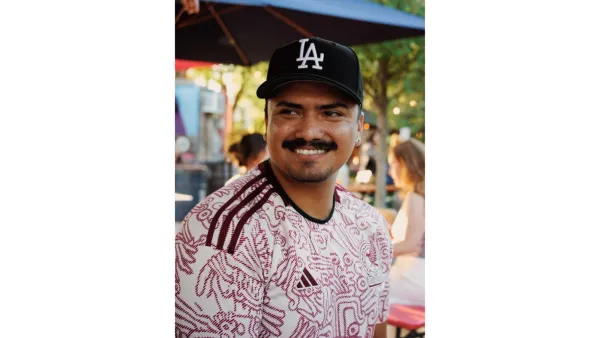
In November 2023, Montes received the Outstanding Master’s Thesis Award from the Human Communication & Technology Division of the National Communication Association. His work has been published in The Journal of Health Communication, The Journal of Computer Mediated Communication and Communication Research Reports.
Montes said receiving this award and being published justified to him that his ideas can turn into a beneficial contribution to science.
Much of Montes' research focuses on non-college-attending young adults, a group he believes is unrepresented in academic studies. He found that among this group, benign envy increased desire to attend college and malicious envy decreased that desire.
“It’s kind of impossible to be on social media and not socially compare,” Montes said. He noted that if research helps society understand why people make evaluations one way or another, that could lead to guidance on ways to behave on social media to avoid the type of comparisons that have a negative impact on health.
Montes hopes his research will help people feel less self-blame for the negative social media effects they experience and to “drive defensively" while using it. This encourages purposeful use rather than avoidance.
Montes chose to pursue his PhD at Ohio State because of the research Ohio State faculty members were doing that aligned with his view on social media. He built strong relationships with the faculty while earning his masters, and his experience with Ohio State’s collaborative environment influenced his decision to stay for his PhD. He works alongside Professor David DeAndrea, who is his advisor, as well as Associate Professor Joe Bayer, who he works with on the psychology behind social media mindsets.
Before arriving at Ohio State, Montes attended community college before transferring to the University of California, Davis.
“There wasn’t anyone really talking about the inspirational effect I got from posts about getting into college,” Montes said. “They told me I could research this stuff and I felt it was important to talk about when and how social media can lead to inspirational and beneficial outcomes versus just being a hater,” said Montes.
Montes hopes to become a professor as he loves teaching and also wants to continue his research. He is interested in teaching at a community college to show students the possibilities of academia.
Article by student Lily Roth