Assistant Professor Dominik Stecuła studies misinformation and how the media environment shapes public opinion on major societal issues like vaccines or the climate.
Stecuła co-authored an article in The Conversation about the use of misinformation about vaccines in the creation of public narratives, and he was quoted in a story by WOSU Public Media on the impact of violent political rhetoric following the murder of Charlie Kirk. He also co-authored a chapter in an Oxford University Press volume on climate obstruction that explores the political and psychological roots of climate misinformation and its impact on public opinion.
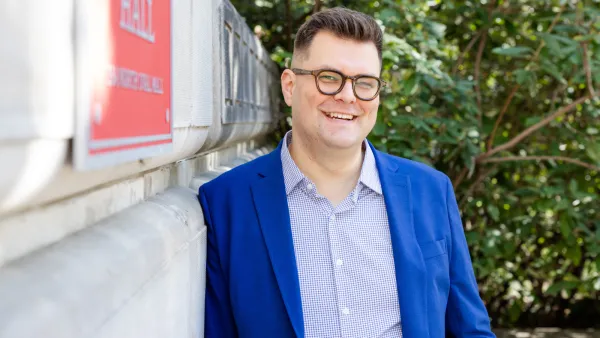
While much of his research focuses on the information media organizations supply to their audiences, Stecuła also examines the demand side, and why audiences seek out certain types of information.
“People frequently want certain things, including misinformation, so you have to understand the media landscape and its ills,” Stecuła said. “You can then only begin to think about how to make things better.”
Stecuła said misinformation presents a challenging problem because it is difficult to define misinformation “in a noncontentious and nonpoliticized way” and then solutions would need to look different for different media and social media platforms that may or may not want to address the issue of misinformation.
“As independently owned businesses that are platforms, they have a lot of latitude in terms of deciding how they want to run their platforms, and the Second Amendment essentially protects them,” Stecuła said.
He added that social media platforms are often reluctant to remove misleading content because there is a demand for it.
“People engage with this content on a regular basis and expect it to be there, so getting rid of it would put them at risk of losing an audience,” Stecuła said.
This combination of factors makes misinformation “a mess to handle in any organized way.”
Stecuła teaches both communication and political science courses at Ohio State where he integrates his research into the classroom. He believes connecting research to coursework gives students deeper insight into the issues they study.
“When you write something, it makes for a better experience for students and is always a little deeper than just assigning a paper someone else wrote.”
He recently authored a chapter titled “Am I in an Echo Chamber?”: Teaching Political Communication Through Applied Research and Collaborative Inquiry in the book “Teaching Political Communication,” which explores innovative ways instructors can teach political communication concepts through hands-on research.
In both his teaching and research, he pushes people to practice “constructive skepticism” and be mindful when consuming information from the internet and out in the real world.
“I try to push against some pre-established narratives and get to the bottom of things in a way that is hopefully helpful for students as they navigate these kinds of questions in their daily lives themselves.”
Stecuła’s Polish background gives him a unique outlook on the causes and consequences of media polarization.
“Having that perspective as a bit of an outsider allows you to think through some of these problems of polarization in a way that would be less immediately obvious for somebody who's more enmeshed in American culture, because that's where they grew up, and that's mostly what they know.”
In such a polarized world, Stecuła hopes to find a way to unite people through common interests and identities. He plans to conduct future research on how sports can play a role in bringing people together, an interest piqued by his involvement with Ohio State.
“I think being at Ohio State will allow me to do some interesting things because of the unique way in which sports is such an important part of the Buckeye identity.”
Article by student Mia Taylor